Pinterest occupies a genuinely different position in the advertising landscape than most other platforms covered in this series, and understanding that difference is worth doing before diving into the technical setup, because it directly affects how you should interpret and act on the conversion data Pinterest tracking generates.
Why Pinterest’s user behavior is structurally different, and what that means for tracking
Pinterest is fundamentally a discovery and planning platform — users frequently browse Pinterest well in advance of an eventual purchase, saving ideas and inspiration for a future project, event, or decision rather than browsing with immediate purchase intent the way a Google Shopping search often implies. This means the gap between a Pinterest ad interaction (a Pin click or save) and an eventual conversion is often meaningfully longer than the equivalent gap on a more immediate-intent platform, which has a direct, practical implication for tracking: attribution window configuration matters even more for Pinterest than for most other platforms, since a narrow, default attribution window is more likely to miss genuine, ad-influenced conversions that simply took longer to materialize than the window allows for.
The core events Pinterest Tag tracks
PageVisit, the foundational event establishing your general remarketing audience.
ViewCategory, a somewhat distinctive Pinterest-specific event tracking category page views, reflecting the platform’s discovery-and-browsing-oriented use case more directly than a straightforward product-page-only view event would.
AddToCart, supporting cart-abandonment remarketing, structurally consistent with the equivalent event on other platforms.
Checkout, Pinterest’s terminology for the conversion event, tracking completed purchases with associated value and product data, feeding both conversion measurement and Pinterest’s audience and campaign optimization tools.
Setting up the Pinterest Tag
Create your tag within Pinterest Ads Manager’s Conversions section, generating the tag ID for implementation.
Implement the base tag, establishing PageVisit tracking across your site.
Configure the ecommerce-specific events, tying ViewCategory, AddToCart, and Checkout to the corresponding WooCommerce actions, with correctly formatted parameters — particularly ensuring Checkout carries accurate order value, currency, and a unique order identifier.
Verify using Pinterest Tag Helper, the platform’s own browser extension for confirming correct tag firing and parameter population, functioning similarly to the equivalent tools covered for other platforms throughout this series.
Why attribution window configuration deserves special attention here
Given the discovery-and-planning nature of Pinterest usage described above, it’s worth explicitly reviewing your Pinterest attribution window settings (Pinterest offers configurable click-through and engagement-based attribution windows, similar in concept to Google Ads’ own attribution window settings covered in this series’ Google Ads discrepancy article) against your actual typical customer journey length for Pinterest-driven traffic specifically. If GA4’s own path-length and time-lag reporting shows Pinterest-attributed conversions taking notably longer, on average, than conversions from other channels, that’s a direct, actionable signal that your Pinterest attribution window may need to be set wider than whatever default Pinterest’s platform initially applies.
The same reliability issues, applied to Pinterest specifically
Client-side tracking’s structural weaknesses — ad blockers, browser privacy restrictions — apply to Pinterest Tag exactly as they do to every other client-side pixel covered in this series. Pinterest offers its own server-side conversion tracking mechanism, the Pinterest Conversion Tracking API, following the same fundamental server-to-server delivery principle covered throughout this series for Meta, TikTok, and GA4’s own Measurement Protocol — worth implementing alongside the client-side tag for the same reliability reasons, with the same deduplication considerations (a shared event ID preventing double-counting between the two delivery paths).
Why Checkout event accuracy matters especially for ROAS interpretation on Pinterest
Because Pinterest’s typical purchase journey often involves a longer consideration period, and because the platform’s overall cost structure and typical campaign objectives can differ meaningfully from more immediate-intent search-based advertising, an inaccurate or incomplete Checkout event has an outsized effect on whether Pinterest advertising looks worthwhile at all in your reported ROAS. A store that concludes “Pinterest doesn’t convert for us” based on an undercounted, client-side-only Checkout event may be making that call on data that’s systematically missing a meaningful share of genuinely Pinterest-influenced purchases, particularly those completing well after the initial ad interaction, exactly the scenario Pinterest’s discovery-oriented use case makes especially plausible.
Category-level tracking as a distinctive Pinterest opportunity
The ViewCategory event, somewhat unique among the platforms covered in this series in how prominently it features in Pinterest’s own recommended event set, reflects an opportunity worth deliberately taking advantage of: since Pinterest users frequently browse by broad interest and category rather than a specific, already-identified product, correctly implemented category-level tracking gives Pinterest’s audience-building and campaign optimization tools a richer signal about interest patterns than product-view tracking alone would provide, potentially supporting more effective prospecting and interest-based targeting than a platform-agnostic implementation that only tracks product-level events might capture.
How TrueAna approaches Pinterest tracking
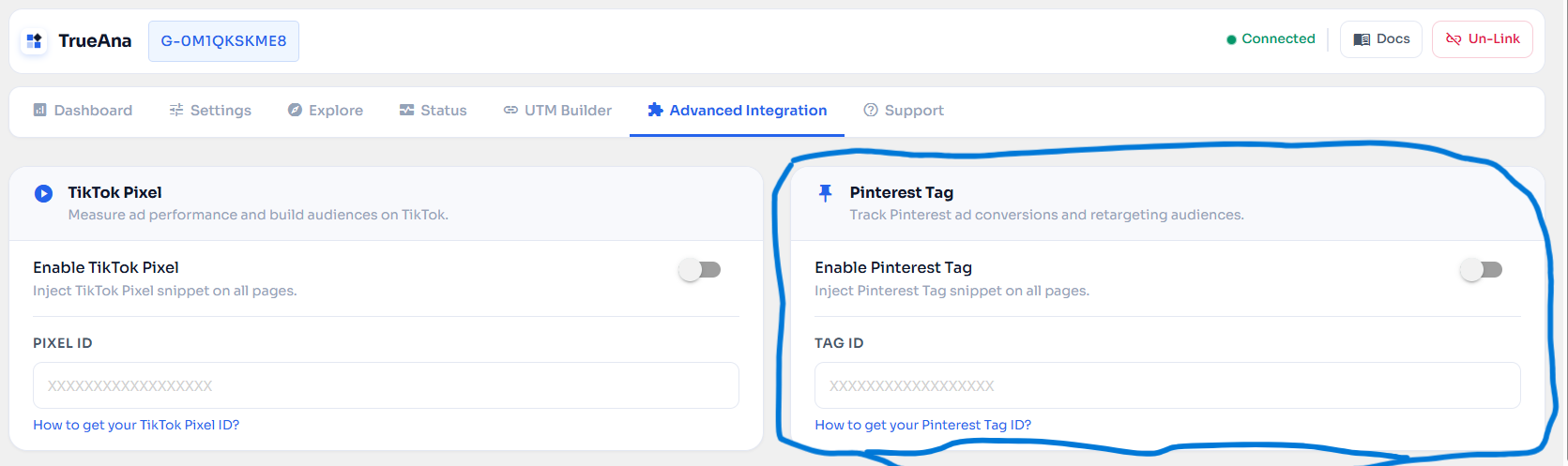
TrueAna’s Pro tier includes Pinterest Tag tracking, covering PageVisit, ViewCategory, AddToCart, and Checkout — fired from the same underlying WooCommerce hooks driving TrueAna’s GA4 tracking and its other included ad platform pixels. This includes the category-level ViewCategory event specifically, addressing the distinctive tracking opportunity described above rather than treating Pinterest as if it needed only the same generic product-view tracking pattern used for other platforms.
Because Checkout event accuracy matters especially for interpreting Pinterest’s often-longer-cycle ROAS correctly, TrueAna’s approach of firing this event from WooCommerce’s own reliable order-completion hooks — consistent with the same event triggers driving its GA4 purchase tracking — helps ensure the Checkout data feeding your Pinterest campaign evaluation reflects your actual completed orders rather than an undercounted, client-side-only approximation.
For stores where Pinterest represents a meaningful and growing acquisition channel, layering Pinterest’s own Conversions API server-side tracking on top of TrueAna’s reliable client-side Pinterest Tag foundation follows the same reliability-enhancement principle covered throughout this series for other platforms’ server-side options.
A practical evaluation approach for Pinterest specifically
Given everything above, evaluating Pinterest’s actual advertising performance deserves a somewhat different approach than a platform with more immediate-intent traffic: look at Pinterest-attributed conversions over a meaningfully longer attribution window than you might apply by default, cross-reference against GA4’s own time-lag data for Pinterest-sourced traffic specifically, and be appropriately skeptical of a quick, narrow-window ROAS conclusion that might be missing a substantial share of genuinely Pinterest-influenced purchases simply because they took longer to materialize than a shorter attribution window accounts for.
The bottom line
Pinterest’s discovery-and-planning-oriented user behavior makes conversion tracking accuracy — and specifically, attribution window configuration and Checkout event reliability — even more consequential for correctly evaluating campaign performance than on more immediate-intent platforms, since a longer typical purchase journey is more vulnerable to both narrow attribution windows and unreliable client-side-only tracking cutting off genuine, ad-influenced conversions before they’re ever counted. TrueAna’s Pro-tier Pinterest Tag tracking, including its distinctive category-level event and consistent, reliable Checkout tracking tied to your actual WooCommerce order data, gives you the accurate foundation this platform’s specific evaluation needs depend on.