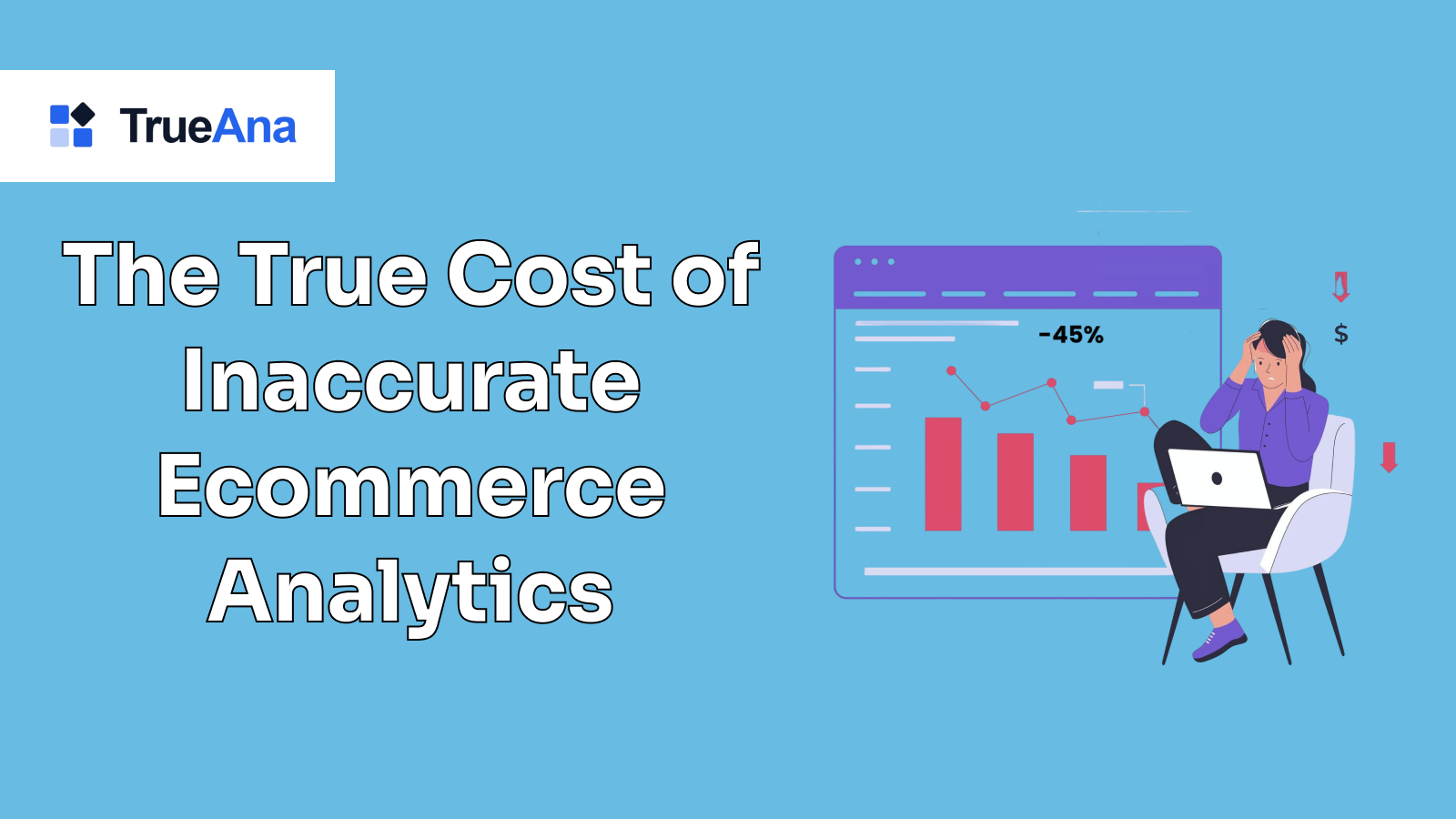
“Our analytics might be a little off” is a phrase that undersells the actual situation in most stores where it applies. It sounds like a minor inconvenience — a rounding error, a number to mentally discount slightly. In practice, inaccurate analytics doesn’t just produce a slightly wrong number; it produces a cascade of downstream decisions built on that wrong number, each one compounding the original inaccuracy into genuinely costly business outcomes. This article breaks down exactly where those costs show up.
Cost 1: Direct, wasted ad spend on misallocated budget
Covered in this series’ ROAS-focused article: if certain channels appear to underperform due to tracking loss rather than genuine weak performance, budget gets shifted away from channels that are actually working, toward channels whose numbers merely look better due to lower tracking-loss rates. This is a direct, quantifiable cost — every rupee moved from a genuinely effective channel to a merely well-tracked one is a rupee generating less actual return than it could have, and this misallocation compounds over every budget cycle it persists.
Cost 2: Weaker automated bidding performance, industry-wide
As covered in this series’ ROAS article, ad platform bidding algorithms directly use your reported conversion data as their optimization signal. Incomplete, systematically skewed conversion data doesn’t just misinform your own manual decisions — it actively trains the algorithm toward a worse-performing targeting strategy, since the algorithm is optimizing toward the wrong population. This cost is easy to overlook because it doesn’t show up as an obvious, isolated line item — it manifests as a persistently higher cost per acquisition than you’d otherwise be achieving, spread across every campaign the algorithm touches.
Cost 3: Cutting genuinely profitable products, channels, or campaigns
A specific, particularly painful version of the misallocation cost: rather than just under-investing in a good channel, inaccurate data can lead to actively cutting it entirely, believing it to be unprofitable when it genuinely wasn’t. This is a real, recurring pattern covered throughout this series — a channel whose audience happens to have higher-than-average tracking loss looks weak enough to justify elimination, when the underlying reality was that it was working reasonably well all along.
Cost 4: Mispriced or mis-prioritized product decisions
If your product performance reporting is built on incomplete purchase event data — missing a meaningful share of actual sales, especially if that loss correlates with specific traffic sources more likely to purchase certain product categories — your understanding of which products are genuinely your best sellers can be measurably distorted, leading to inventory, pricing, and merchandising decisions based on an inaccurate picture of actual demand.
Cost 5: Compounding subscription business damage through inaccurate churn and MRR data
For subscription businesses specifically, covered extensively in this series’ subscription analytics cluster, inaccurate lifecycle tracking (failing to distinguish voluntary from involuntary churn, or missing renewal and cancellation events entirely) doesn’t just produce a wrong number on a dashboard — it directs retention effort toward the wrong problem entirely, potentially investing significant time and resources into product or pricing changes trying to address what’s actually a fixable payment-recovery problem, or vice versa. This misdirected effort has its own real opportunity cost, separate from the direct revenue impact of the churn itself.
Cost 6: Erosion of trust in data-driven decision-making generally
This is a subtler, longer-term cost worth taking seriously: once a store owner or team notices their analytics don’t match reality (a common realization, since discrepancies covered throughout this series eventually surface in some form), there’s a natural, understandable tendency to start distrusting the data more broadly — not just the specific number that was caught being wrong, but the entire analytics setup’s credibility. This can lead to a genuinely costly overcorrection: reverting to gut-feeling decision-making even in areas where the underlying data, had it been trustworthy, would have provided genuinely valuable guidance. The cost here isn’t just the original inaccuracy — it’s the broader loss of a data-driven decision culture that inaccurate analytics can trigger once discovered.
Cost 7: Wasted time reconciling and second-guessing numbers
A more mundane but genuinely real cost: time spent by store owners, marketers, or analysts trying to reconcile mismatched numbers between platforms, investigating why a specific report looks “off,” or simply hedging every data-driven recommendation with “but our tracking might not be fully accurate” is time not spent on genuinely productive analysis or strategic work. This cost accumulates quietly, in small increments, across every reporting cycle where the underlying tracking reliability issue remains unaddressed.
Cost 8: Missed early-warning signals
Reliable analytics serve a genuinely important early-warning function — catching a checkout problem, a payment gateway issue, or a specific campaign’s declining performance before it compounds into a much larger problem. Inaccurate or unreliable tracking dulls this early-warning capability, since genuine signals get buried in noise (is this dip real, or just tracking variance?), meaning real problems can persist longer, unaddressed, before they’re finally caught through some other, less timely means (a customer complaint, a noticeable revenue shortfall at month’s end).
Why these costs are genuinely difficult to see in the moment
Every cost listed above shares a common trait: none of them present themselves as an obvious, single, attributable line item. There’s no invoice for “wasted ad spend due to misallocated budget” or “opportunity cost from cutting a genuinely good channel.” These costs are diffuse, distributed across many small decisions over time, which is exactly why inaccurate analytics can persist for months or years without prompting the kind of urgent attention a more visible, immediate cost would receive — and exactly why it’s worth deliberately, proactively addressing tracking reliability rather than waiting for an obviously costly incident to force the issue.
A rough way to estimate your own exposure
Rather than a universal dollar figure (which would be genuinely misleading given how much this varies by store), a reasonable exercise: calculate your current tracking gap (GA4/ad-platform-reported revenue versus actual WooCommerce order revenue, per the diagnostic approach covered throughout this series), and apply that percentage gap as a rough proxy for how much of your decision-making data is currently incomplete. A store with a 25% tracking gap isn’t necessarily losing 25% of its revenue to bad decisions, but it’s a reasonable, concrete signal of how much of its analytical foundation is currently unreliable — worth taking seriously as an indicator of exposure across all eight cost categories above, even without a precise dollar figure attached.
How TrueAna addresses the root cause underlying all eight costs
Every cost category in this article traces back to the same underlying issue covered throughout this series: incomplete, unreliable event tracking, primarily driven by dependency on client-side-only delivery. TrueAna’s server-side Measurement Protocol delivery, included free for the complete WooCommerce event set, directly addresses this root cause — meaning the downstream costs described in this article (misallocated ad spend, weakened bidding algorithm performance, mispriced product decisions, eroded trust in the data) are each addressed at their common source rather than requiring separate, individual fixes for each specific symptom.
The plugin’s consistent event tracking across GA4 and ad platform pixels, combined with Pro-tier subscription lifecycle tracking for stores where Cost 5 specifically applies, extends this reliability foundation across the full range of decisions covered in this article — giving stores a genuinely trustworthy analytical foundation to build decisions on, rather than one requiring the kind of constant mental discounting and second-guessing described in Cost 7.
The bottom line
Inaccurate ecommerce analytics doesn’t cost you one clean, identifiable amount — it costs you across at least eight distinct, compounding categories: misallocated ad spend, weaker algorithmic optimization, prematurely cut good channels, mispriced product decisions, misdirected subscription retention effort, eroded trust in data-driven decision-making, wasted reconciliation time, and missed early-warning signals. None of these show up as a single line item, which is precisely why they’re so easy to underestimate and so important to address proactively — addressing the underlying tracking reliability gap, the way TrueAna’s server-side architecture is built to do, closes off all eight cost categories at their shared root cause rather than requiring you to notice and address each one individually, often only after it’s already caused real, if hard-to-quantify, damage.